Facebook Ads Not Delivering or High CPM? Check Your Feedback Score
Your Facebook ads stopped delivering. Or the CPM doubled overnight, and nothing you touch in Ads Manager pulls it back down. Here is the part most people miss. The cause often isn’t in Ads Manager at all. High CPM and delivery trouble can come from a lot of places, but one of the most overlooked is your feedback score. It’s the invisible customer-experience signal that quietly decides how cheaply, and how much, your ads get delivered.
The trap is that it never looks like a customer-experience problem.
It looks like an ads problem. So brands burn weeks swapping creatives and rebuilding campaigns while the real drag sits one layer down, untouched.
First, rule out the obvious
Before you go blaming anything hidden, clear the usual suspects. Most delivery and CPM problems really do live right here.
- Creative fatigue. Frequency climbing, CTR falling. The audience has simply seen it too many times.
- Audience and competition. Too narrow, ad sets overlapping, or a seasonal spike in auction competition (Q4, sales events) lifting everyone’s CPM at once.
- The learning phase. Too many edits, or budgets too low to ever exit learning, so delivery never settles.
- Budget and bid setup. A sudden budget jump, a restrictive bid cap, or a tiny audience quietly starving delivery.
- Policy and review. An ad or account flag capping how much can actually run.
If tightening these fixes it, great. You’re done. The problem is what happens when you’ve checked every one of them and the account still refuses to deliver at a sane cost.
When the usual fixes don’t work, look at the invisible signal
If it’s specifically the cost that jumped, our 3-layer CPM diagnosis breaks down every cause, external to internal.
Here is the pattern. New creatives come out at the same elevated CPM. New audiences don’t move it. Restructuring changes nothing. When the drag follows the account rather than any single campaign, that’s the signature of a signal problem, and your feedback score is the most common culprit. It’s the 0–5 rating Meta builds from post-purchase customer surveys. It’s been invisible since Meta pulled the number out of Business Suite in late 2024, but it still shapes delivery and cost. A weak score is exactly the thing that produces “everything looks fine, but nothing performs.”
Why a weak signal shows up as high CPM and throttled delivery
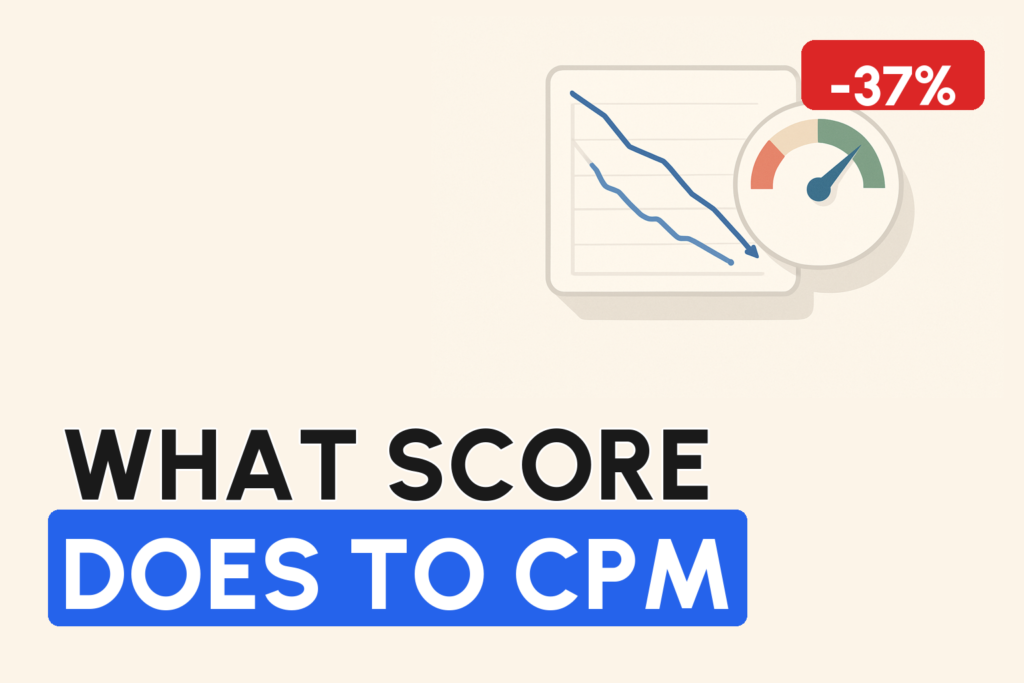
Meta’s auction doesn’t run purely on your bid. It leans toward advertisers it reads as trustworthy and high quality. In our experience, accounts effectively sit in tiers. Strong-signal accounts get treated like preferred advertisers: cheaper CPM, smoother delivery, more room to scale. Accounts with a degraded customer-experience signal drift into worse tiers, where the same bid buys less reach, delivery gets wobbly, and at the very bottom, ads get throttled or barely spend at all. You never see the tier. You just feel it, as a CPM you cannot creative your way out of. (For the diagnostic view of this, see low feedback score: symptoms & what it’s costing you.)
Ads suddenly stopped or CPM doubled overnight? The timing tell
Sudden shifts leave a fingerprint. They usually trail a customer-experience event by days or weeks. A logistics disruption, a bad supplier batch, a spike in refunds. Then the CPM explodes or delivery stalls, seemingly out of nowhere. In our experience, when a store hits a fulfilment problem, the CPM tends to follow shortly after. So if your ads “suddenly stopped” or costs jumped with nothing changed on the ad side, go back and look at what changed on the operations side in the weeks prior. That lag is the tell. The feedback signal moved, not the creative.
How to fix it, and what else to check
If the feedback signal is the cause, the fix is structural, not tactical. You repair the customer-experience inputs (shipping, product, support) and then work back down the accumulated history. We walk through the whole thing in how to improve your feedback score. Feedback score isn’t the only account-health factor that raises CPM or chokes delivery. Account structure, compliance history, and Business Manager standing all play a part too. But it’s the one most brands never think to check, and often the single biggest lever. Rule it in or out before you spend another month blaming your creatives.
Get a straight answer on why your delivery broke
Working out whether it’s your feedback signal, your account structure, or something else entirely, without the guesswork, is exactly what our team does. Across 1,000+ e-commerce accounts, Unlimited Scaling audits the signals behind your delivery and CPM, finds the real cause, and fixes it at the root. No guarantees, no shortcuts. Just a clear diagnosis and the structural work to back it.
The scaling gate: why delivery so often breaks right around 3K/day
One pattern we see again and again. The account cruises easily to a few hundred, then a few thousand dollars a day. Then it hits a wall. The same creatives, the same offer, the same structure, and suddenly none of it delivers at a sane cost. In our experience that wall tends to cluster around the point where you cross roughly 50 to 100 orders a day. Call it the ~3K/day mark, though it shifts with your average order value.
Here’s how we read it, and this is our interpretation, not a Meta-published rule. Getting to that first milestone is relatively easy. Going past it trips a stricter layer of quality control. Once you’re moving real volume, Meta has enough data on your business to effectively ask one question: do I trust this advertiser enough to open the gates and let them scale further? If the system lands on “no,” you don’t get an error. You don’t get a warning. Delivery just quietly refuses to follow your budget, and you end up cutting creatives that were actually fine.
A related tell we watch for is scaling velocity. Based on the reports we’ve seen, jumping from a standing start to 5K or 10K a day inside a couple of months can itself read as a red flag. It can prompt the system to re-check your customer-experience standing before it lets you keep going. Outrun what your inventory and fulfilment can actually support, and you invite exactly the throttle you’re trying to scale through.
The Andromeda shift: why customer feedback got heavier in late 2025
If your delivery got noticeably harder to hold in Q4 2025 or into 2026, part of the backdrop is Meta’s Andromeda ranking overhaul. The widely-discussed part of Andromeda is about creative volume and testing. The part far fewer people talk about, and the part that matters for delivery, is this. Based on what we’ve seen, and what people close to Meta have described, customer-satisfaction signals became a heavier input into the auction from around late 2025 onward.
The logic fits Andromeda’s whole thrust. Meta wants advertisers to behave like established, professional brands, and a big part of “professional” is keeping customers happy. So the same customer-experience signal this article is about didn’t fade when the public score disappeared. In our reading it got more weight, not less.
Usefully, the fixes that line up with this shift are the ones Meta itself effectively rewards. So they’re safe to act on no matter the exact mechanics.
- Make your creatives match reality. Sizing, materials, what’s actually in the box. A mismatch here is one of the fastest ways to generate the “not as advertised” complaints that drag delivery.
- Set clear delivery and return expectations, and make the policy easy to find. In our experience Meta’s systems can read your site, so a vague or hidden policy can count against you before a single customer complains.
- Send tracking proactively. A customer who can see where their order is doesn’t panic. And doesn’t leave the “never received it, never heard from you” feedback that we find hits performance hardest.
- Answer fast across DMs, email and comments, and warn customers early about delays or out-of-stocks instead of waiting for them to get angry first.
- Don’t outrun your inventory. Scale within what you can actually fulfil, or the growth itself manufactures the complaints that cap it.
Note that several of these, unclear delivery terms, unrealistic claims, fake “low stock” or fake countdown timers, can in our experience be penalised on the basis of Meta reading your site directly, without waiting for any customer feedback at all.
The rejected-batch trap: how one bad upload can throttle the whole account
Not every account-level drag comes from customers. Here’s a separate cause we run into often. A single batch of rejected ads quietly dragging down the account’s internal standing for weeks afterward. The classic version: a store uploads a borderline batch, gets a cluster of rejections, and then, two or three weeks later, watches CPM climb and delivery soften across everything, long after those specific ads are gone.
The frustrating part, in the cases we’ve seen, is the timeline. Leave a flag like this alone and it can take on the order of one to two months to clear on its own. During that window, more or less whatever you run underperforms, no matter how good the new creative is. That’s why “I fixed the ads, why is it still bad?” is such a common complaint. The ads were never the live problem.
Two practical takeaways.
- Treat borderline offers and claims as an account-health risk, not just a rejection risk. A rejected ad isn’t a free miss. The rejection itself can leave a mark that outlives the ad.
- Line up the timing. If delivery went sideways with no customer-experience event to blame, look back two to four weeks for a batch of rejections or a compliance-borderline push. That lag is the fingerprint.
This sits alongside the customer-feedback story above, not instead of it. When the cost jump is the main symptom, our 3-layer CPM diagnosis separates these account-level causes from the external and campaign-level ones, and the high-value-advertiser standing angle covers the flip side: what “good” internal standing actually buys you at scale.
Why your public reviews can look great while delivery quietly dies
Here’s a confusing situation we hear constantly. “My star rating is 4.9, my reviews look clean, so why did my ads die?” In our experience the public rating and the signal that actually prices your delivery are two different things. Public ratings and reviews can lag by weeks, show glitchy or fake numbers, or simply never update. We’ve seen genuinely good stores sitting at a 2, and sloppy ones flashing a 4.5. So a clean-looking review section tells you very little about your standing.
The quieter signal worth watching is Meta’s page recommendation percentage, the “X% recommend this business” figure surfaced on some pages. Based on what we’ve seen, the higher that percentage, the smoother ads tend to run, and the reverse is a warning sign long before anything shows up in Ads Manager. If your reviews look fine but delivery is choking, don’t take the star rating as the all-clear. Check whether the underlying feedback signal and recommendation percentage agree with it. When they don’t, the hidden signal is the one setting your CPM.
FAQ
Why did my Facebook ads suddenly stop delivering?
After ruling out the usual causes (learning phase, tiny audience, budget or bid issues, a policy flag), a common overlooked reason is a degraded feedback score. If the slowdown followed a fulfilment, product or refund problem by a few days or weeks, that customer-experience signal is worth checking. It can throttle delivery without any visible warning.
Why is my Facebook CPM so high all of a sudden?
CPM spikes can come from creative fatigue, auction competition or seasonality. But if new creatives and audiences don’t help, the drag is often at the account level. A weak feedback score tends to lower how favourably Meta treats your account in the auction, which shows up as a higher CPM floor you can’t creative your way out of.
Can a low feedback score really cause high CPM and delivery issues?
In our experience, yes. It’s one of the most common hidden causes. The feedback score feeds Meta’s trust and quality signals, which influence auction competitiveness and delivery. It’s not the only factor (structure and compliance matter too), but it’s the one most advertisers never think to check.
Written by Mouss, founder of Unlimited Scaling, an agency that has helped 1,000+ e-commerce brands recover and protect their Meta ad assets. Based in Bali, he has spent 8+ years inside the mechanics of Meta’s ad ecosystem, feedback scores, HIVA tiers, bans and appeals, and shares field data from real client cases. Follow him on Instagram @mouss_unlimitedscaling.